

Inside the Operations of a Deconstruction and Personal Property Appraisal Firm

President & CEO, The Green Mission Inc. ~ Probity Appraisal Group ~ GM-ESG
People often ask me what a typical week looks like in the deconstruction appraisal business. The answer is that no two weeks are ever alike; but the volume and variety of work would surprise most. Since founding The Green Mission Inc. in 2019, we have built our firm into an operation that touches hundreds of projects annually, spanning everything from single-room renovations to the complete decommissioning of commercial buildings. This week I was in NYC with inspections in Harlem and Midtown and active projects in The Bronx and Williamsburg, Brooklyn.
This article offers a behind-the-scenes look at what it actually takes to operate at scale in this specialized field; from the initial inquiry to the delivery of an IRS Qualified Appraisal.
The Weekly Quote Volume
Every week, our team quotes approximately 50 potential jobs. These inquiries represent a remarkable cross-section of the built environment, from individual homeowners renovating a kitchen to developers decommissioning entire commercial complexes.
The scope ranges dramatically. On the smaller end, we receive inquiries for donations of renovated kitchens quote often, often with custom cabinetry being replaced despite having years of useful life remaining. On the larger end, we are quoting full residential deconstructions where entire homes are carefully dismantled, or commercial projects involving the interior elements of office buildings slated for demolition.
This weekend alone, we reviewed five potential deconstruction sites across the New York City boroughs and quoted five additional residential deconstructions and renovations in Chicago, Illinois, Phoenix, Arizona, Charleston, South Carolina, Boulder, Colorado, and Northern Virginia.
The Range of Donations

Understanding what can be salvaged and donated requires deep familiarity with building components, secondary markets, and the practical realities of deconstruction. Here’s what we typically encounter across different project types:
Kitchen Renovations

A common kitchen donation might include custom cabinetry, a double oven, gas cooktop, range hood, kitchen sink, faucet, garbage disposal, dishwasher, and refrigerator. These projects represent the entry point for many donors who discover the tax benefits of donating building materials during a renovation.
Full Residential Deconstructions
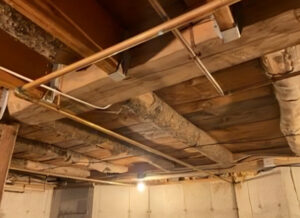
When an entire home is deconstructed, the inventory expands significantly: interior and exterior doors, dimensional and structural lumber, windows, built-in cabinetry throughout the home, millwork and trim, masonry and stonework, lighting fixtures, exterior railings, and deck materials. A well-executed residential deconstruction can yield dozens or even hundreds of individual items, each requiring separate valuation.
Commercial Deconstructions
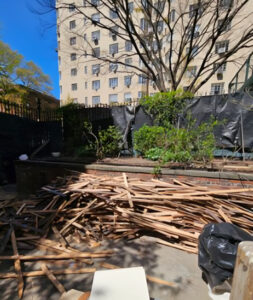
Large-scale commercial projects present both the greatest opportunities and the most significant challenges. These can include structural lumber, reclaimed steel and copper, large machinery systems with remaining useful life—HVAC equipment, solar panel systems, water filtration systems, and security systems.
Office furniture and fixtures present a particular challenge. The secondary market for commercial office furniture is dramatically oversupplied, with limited demand for used cubicle systems, conference tables, and task chairs. This market reality directly impacts Fair Market Value, which is a critical consideration that less experienced appraisers often miss.
The IRS’s definition of FMV requires a willing buyer, willing seller, both knowledgeable of the facts, adequate exposure time and no duress. While a custom rosewood conference table may have cost $55,000, a willing buyer will typically pay no more than $1,000 for this table on the secondary market. However, a new Miele dishwasher may cost $2,000, a willing buyer will pay anywhere from $400 to $1,000 for a used unit depending upon model and condition. FMV incorporates the specific market metrics that demonstrate that used Miele dishwashers are in higher demand and smaller supply than custom 20’ conference tables.
The Quoting Process
We gather information from multiple sources: the property owner or their representatives, deconstruction contractors on the ground, and nonprofit organizations that will ultimately receive the materials. This triangulation is essential, to ensure each party brings a different perspective on what can realistically be extracted, preserved, and donated in reusable condition. Deconstruction contractors understand what can realistically be removed and salvaged, nonprofits know what they can accept for reuse, and clients often decide to save some pieces for their own reuse.
For each potential project, we produce a detailed quote within 24-48 hours that lists all property elements with photographs and an estimated Fair Market Value range. We also provide our appraisal fees so the client has complete information for their financial decision-making. This information is key to deconstruction decision making so we prioritize the quote work with our team.
The client then works with their deconstruction and demolition team and their tax advisors to determine whether the charitable deduction works for their specific tax situation. If the deduction is not available or beneficial, they compare deconstruction costs against traditional demolition and make their decision based on those economics. This transparency is essential; deconstruction is not right for every project, tax benefits do not always offset the higher cost of deconstruction, construction timelines do not always align, and some projects do not yield enough salvageable elements and are more fit for recycling or the dumpster.
When the Appraisal Work Begins
A critical point that distinguishes proper appraisal practice from shortcuts: we do not begin the formal appraisal until after the deconstruction is complete and the donation has been received.
Prior to completing any appraisal, we require an itemized donation receipt from the recipient organization. We only appraise items that were successfully deconstructed and donated in reusable condition. This protects the taxpayer from claiming deductions for materials that were ultimately damaged during removal or rejected by the nonprofit.
As I detail in our Comprehensive Guide to Deconstruction Appraisals, the IRS requires what is called a Contemporaneous Written Acknowledgement from the nonprofit, which is documentation that establishes the date, recipient, and detailed inventory of materials donated. This is the foundation upon which the entire appraisal rests.
The Research and Writing Process
Producing an IRS Qualified Appraisal is not a quick process. For a full residential deconstruction, proper research and reporting typically requires 80-90 hours of office time and is delivered within 60-90 days of receiving the donation receipt; but always taking tax deadlines into account. Here is what that work entails:
One: Detailed Item Description
Every item in the appraisal receives a specific, detailed written description. Generic categorizations—the kind that led to disallowed deductions in cases like Chirelli v. Commissioner—are insufficient. Each item must be specifically identified with objective condition details, not vague terms like “excellent” or “good.”
Two: Photographic Documentation
Poor-quality photographs are not adequate for the appraisal. Items must be photographed clearly, with images cross-referenced to written descriptions in the report.
Three: Comparable Sales Research
This is where the real work happens. The IRS and all three major personal property appraisal organizations (ASA, AAA, and ISA) agree that the Sales Comparison Approach must be used for determining Fair Market Value of donated property. This means researching actual sales of comparable items in the secondary market. Also, these are always PERSONAL PROPERTY appraisals. Some appraisal firms try to use real estate appraisals to substantiate deconstructed personal property donations. The principle of detachment occurs when real property is extracted from the underlying land. Real property valuations of the “improvements” are often 3-5x higher than the value as detached personal property. We certainly see the motivation in wishing to use a real property appraisal.
For each item appraised, we identify multiple comparable sales from our database of 800+ secondary retail sources including stores, websites, and auctions specializing in second-hand building materials, home furnishings, fixtures, and appliances. The IRS prefers three solid comparables for each item, ideally within a three-year period.
Four: Statistical Analysis
Multiple comparable sales allow us to apply statistical tools—mean, median, mode, and range—to identify pricing patterns and eliminate outliers. This rigorous approach produces defensible valuations that can withstand IRS scrutiny.
Five Narrative Analysis
We do not let comparables speak for themselves. Each valuation includes analysis explaining how each comparable relates to the subject property—adjustments for condition, age, brand, features, and market factors.
Technology and Efficiency
Operating at scale—quoting 50 projects weekly, serving approximately 1,000 clients annually—requires deliberate investment in systems and efficiency. Over the past six years, we have:
- Streamlined our workflow from initial inquiry through final report delivery, reducing administrative friction while maintaining quality standards
- Automated where appropriate, while never compromising on the human judgment required for proper valuation methodology.
- Developed proprietary AI tools for item identification and written descriptions, allowing our appraisers to work more efficiently while maintaining the specificity the IRS requires.
- Built and maintained a proprietary database of comparable sales observed over more than six years of operations. This database is continuously updated as we add new secondary retailers every week.
These investments in technology and process do not replace the fundamental work of proper appraisal methodology. Rather, they enable us to do that work more effectively across a larger client base.
Delivering an IRS Qualified Appraisal
The final deliverable is an IRS Qualified Appraisal and is a comprehensive document that meets the standards set forth in IRC §170(f)(11)(E) and Treasury Regulation §1.170A-17. It includes:
Complete descriptions of each item with condition assessments, high-quality photographs cross-referenced to descriptions, comparable sales data with sources and analysis, statistical analysis of pricing data, correct effective date, valuation date, and report date, USPAP certification and compliance statement, and all required disclosures.
The appraisal is accompanied by our completion of Part IV (Declaration of Appraiser) of IRS Form 8283. The client and their CPA complete Parts I through III; the nonprofit completes Part V. This multi-party attestation system is one of the few IRS forms requiring independent verification from both an appraiser and the recipient organization.
The Bigger Picture
A week in deconstruction appraisals involves far more than most realize; coordinating with contractors, nonprofits, and property owners; researching secondary markets; applying proper valuation methodology; producing detailed documentation; and ensuring IRS compliance at every step.
At The Green Mission Inc., we have completed approximately 500-1,000 IRS Qualified deconstruction appraisals a year since we started in 2019, generating millions in substantiated charitable deductions annually for our clients. Every one of those appraisals required the same rigorous process: proper methodology, thorough documentation, and unwavering attention to IRS requirements.
Tax policy that aligns with environmental sustainability is rare. When building materials are diverted from landfills and given new life while providing meaningful tax benefits to property owners, everyone wins. Our job is to ensure those deductions are properly substantiated—protecting both taxpayers and the integrity of the deconstruction movement.
About the Author

CPA, ISA AM President & CEO The Green Mission Inc.
Jessica I. Marschall, CPA, ISA AM is a certified public accountant with 26 years of experience and an IRS Qualified Appraiser specializing in personal property and deconstruction appraisals. She serves as President and CEO of The Green Mission Inc., GM-ESG, Probity Appraisal Group, and MAS LLC. Jessica holds an Accredited Member designation from the International Society of Appraisers and has accumulated over 400 hours of continuing education in appraisal methodology, tax law, and valuation practices.
The Green Mission Inc. ~ Probity Appraisal Group ~ GM-ESG
Expert Deconstruction Appraisals & IRS Qualified Services
TheGreenMissionInc.com
(540) 322-3884 | Info@TheGreenMissionInc.com
© 2026 The Green Mission Inc. All Rights Reserved.