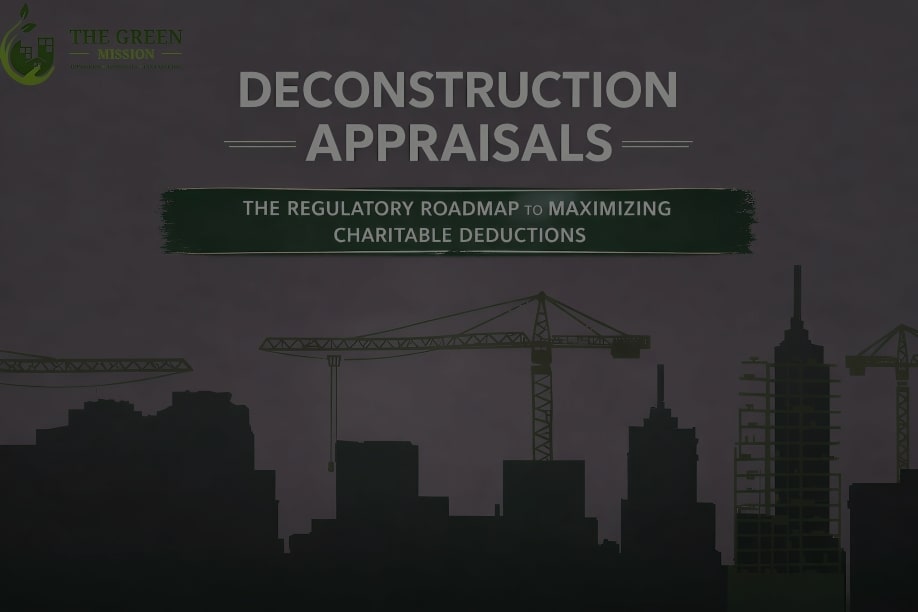
When property owners choose deconstruction over demolition, they unlock powerful tax benefits through charitable contributions that can offset, or sometimes even exceed, additional project costs. Yet the pathway from salvaged materials to legitimate tax deductions is fraught with technical requirements that, if overlooked, trigger complete disallowance of these benefits. The IRS has transformed noncash charitable contributions into an enforcement priority, wielding strict procedural standards as their primary weapon against perceived abuse.

On November 7th, 2024, the Appraisers Association of America (AAA) hosted an enlightening panel featuring Susan Hunter (moderator), Karin Gross (IRS Counsel), and Meredith Meuwley, AAS (Art Advisory Services). The panel discussed critical updates and best practices for appraisers preparing reports for gift, estate, and non-cash charitable contributions, highlighting the importance of professionalism, due diligence, and adherence to IRS guidelines. Below is a detailed summary and analysis of the discussion, crafted for CPAs, personal property appraisers, and most importantly, the taxpayer.
When making charitable contributions, taxpayers often consider donating either appreciated real estate or personal property. While both can yield significant tax benefits, the IRS applies different rules regarding deductibility, Adjusted Gross Income (AGI) limitations, and carryforward provisions. Understanding these distinctions can help donors maximize their tax benefits.