
Behind every reused cabinet, donated appliance, and reclaimed beam is a quiet chain of professionals racing the clock to keep materials out of landfills, while giving donors the documentation they need to do it right.
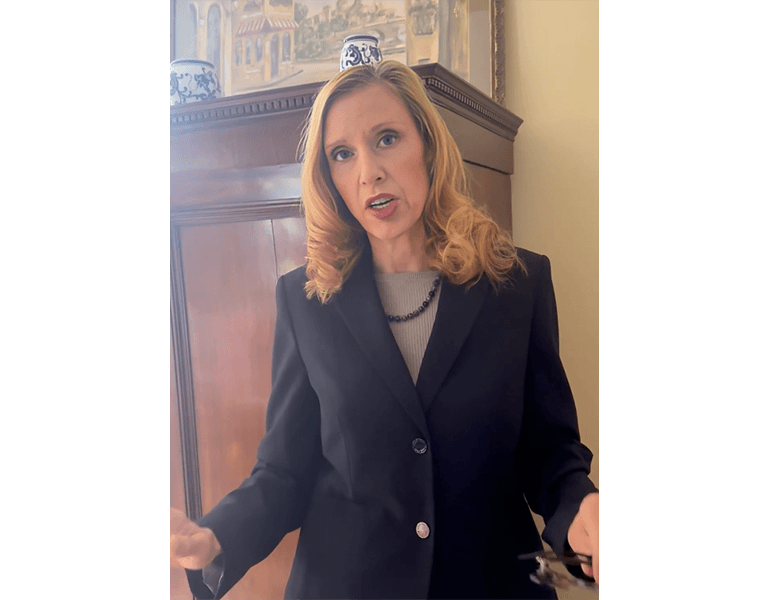
By Jessica Irving Marschall, CPA, ISA AM
President & CEO, The Green Mission Inc. and GM-ESG March 2026
No two days at The Green Mission look quite alike, and that is precisely the point. On any given morning, my team might be preparing a quote for a national sports franchise donating an entire arena’s worth of property, while simultaneously fielding requests from a homeowner in Hawaii clearing out a kitchen before demolition. What ties these projects together is a common belief: that the responsible, environmentally sound choice should also be the financially well-documented one.
We serve donors across all fifty states. That geographic breadth keeps us humble and constantly learning. I would be remiss not to mention Reuse Hawaii specifically. The extraordinary work coming out of that organization is a genuine inspiration. They are proof that a strong regional reuse culture, paired with the right professional support, can produce remarkable environmental outcomes on an island where every ton of landfill space is precious.
3 - 10
PROJECT QUOTES PER DAY
24 - 48
HOUR QUOTE TURNAROUND
2 - 3
APPRAISAL REPORTS SENT DAILY
The Quote That Started the Week
This particular week opened with a project that captured everything we love about this work in one scope of engagement. A large national sports team, one whose name you would recognize immediately, made the decision to donate all property from a major decommission project to charity rather than route it to the landfill. The scale was significant: seating, infrastructure, equipment, furniture, and fixtures accumulated over decades of use.
The donor’s board of directors and shareholders needed something more than a simple receipt. They needed a comprehensive report detailing which charities received the property, what the tangible community impact looked like, and, increasingly critical to institutional ESG reporting, the carbon avoidance metrics and tonnage of landfill space saved. This is where our appraisal and documentation work becomes as much a communications function as a compliance one. The numbers tell a story that resonates in boardrooms and annual reports alike.
The carbon avoidance metrics and tonnage of landfill space saved are no longer footnotes. They are headlines in ESG reporting, and our job is to make sure those numbers are defensible, accurate, and professionally documented.
Quoting a project of this magnitude requires us to move quickly. The donor, their tax team, the deconstruction contractor, the demolition crew, and the property owners all need estimated numbers in hand, typically within 24 to 48 hours, so that the financial calculus can begin. Deconstruction costs more than demolition typically, but it also creates more jobs and is higher-paid labor. Skilled labor to carefully extract and preserve materials rather than simply demolish them is a real line item. The question every stakeholder is weighing is whether the additional cost of responsible deconstruction is offset by the charitable deduction, where applicable. We exist in part to help answer that question with professional-grade estimates, produced expeditiously.
The Daily Rhythm: Small Kitchens to Full Corporations
While the sports franchise project occupied one corner of the week, the rest of the day unfolded as it always does: a steady, varied stream of quote requests from every corner of the country. Small kitchen donations, a set of cabinets, a refrigerator, a range, sit alongside full residential deconstructions and large corporate decommissions. The range is genuinely remarkable. A single afternoon might see us quoting a single-family home teardown in the Pacific Northwest and a multi-floor office buildout liquidation on the East Coast.
We aim to turn every quote around within 24 to 48 hours without exception. The urgency is real. Construction timelines do not pause for paperwork, and the window in which a building’s contents can be thoughtfully redirected rather than demolished is often surprisingly narrow. Our speed is not a convenience rather it is a structural requirement of the work.
PROCESS NOTE · IRS COMPLIANCE
Why the Contemporaneous Written Acknowledgement Is Everything
Once a project closes, we wait for the formal Contemporaneous Written Acknowledgement from the receiving nonprofit. This document attests to all property actually extracted and donated. It is not a formality; it is the evidentiary foundation of an IRS Qualified Appraisal. Items added after the original quote are incorporated; anything that could not be donated, that the donor chose to keep, or that was otherwise diverted for any reason is removed. The accuracy of the final appraisal report depends entirely on the accuracy of this attestation.
Writing the Appraisals: Where Precision Matters Most
After the Contemporaneous Written Acknowledgement is in hand, our team writes the formal appraisal report. We send approximately two to three of these per day. Each report must reconcile the original quote with the final reality of what was donated, account for any additions or removals, and produce valuations that are defensible under IRS scrutiny. The standards governing noncash charitable contribution appraisals are exacting, and our professional credentials as a CPA and ISA Accredited Member exist precisely because this work demands that level of accountability.
The appraisal is ultimately what the donor submits with their tax return. Its accuracy protects the donor. Its methodology reflects on our firm. And its integrity supports the broader charitable ecosystem that depends on these donations being reported honestly and completely.
Every accurate appraisal is a small vote of confidence in the secondary market for used building materials, telling donors, contractors, and nonprofits alike that this process works and is worth doing again.
The Bigger Picture We Are Building Together
It is easy, in the daily press of quotes and reports and acknowledgement letters, to lose sight of what this cycle actually represents. When a donor chooses deconstruction over demolition, they are making an environmental choice. They are deciding that the cabinets in that kitchen, the stadium seats in that arena, and the desks in that office deserve a second life rather than a landfill grave. Our job is to make that choice as financially viable, as professionally documented, and as administratively smooth as possible.
The secondary retail market for used building materials is not yet where it needs to be. Organizations like Reuse Hawaii and the many Habitat for Humanity ReStores and independent reuse operations across the country are doing the hard work of creating demand and distribution channels. Every project we document, from the smallest appliance donation to the largest corporate decommission, adds a data point to the case that this market works, that these materials have real value, and that the infrastructure to move them responsibly exists and is growing.
It is busy work. It is detail-oriented, deadline-driven, and professionally demanding. But it is also genuinely exciting, because every project that crosses our desk represents a person or an organization choosing the harder, better path. We are grateful to play even a small role in building the systems that make that choice easier to make.
Jessica Irving Marschall, CPA, ISA AM, is President and CEO of The Green Mission Inc. and GM-ESG, a firm specializing in noncash charitable contribution appraisals for donated building materials and property, ESG documentation, and carbon avoidance reporting for deconstruction and decommission projects nationwide.