
Recent Appraisal Work in South Carolina’s Lowcountry
The Green Mission Inc. & GM-ESG
President & CEO of The Green Mission Inc., ~ GM-ESG
January 2026
Over the past two months, The Green Mission Inc. and GM-ESG have completed multiple IRS-qualified appraisals for deconstruction projects throughout the greater Charleston, South Carolina area. Our work has taken us to the pristine barrier islands of Kiawah Island, Isle of Palms, and Sullivan’s Island, as well as into the heart of historic downtown Charleston for an interior gut renovation of a treasured historic home. Recently I traveled here with our team member Amy Bria to tackle inspections and meetings for two residential teardowns and one commercial. These projects exemplify how thoughtful deconstruction preserves irreplaceable materials while generating meaningful charitable deductions for property owners.
Charleston's Architectural Heritage
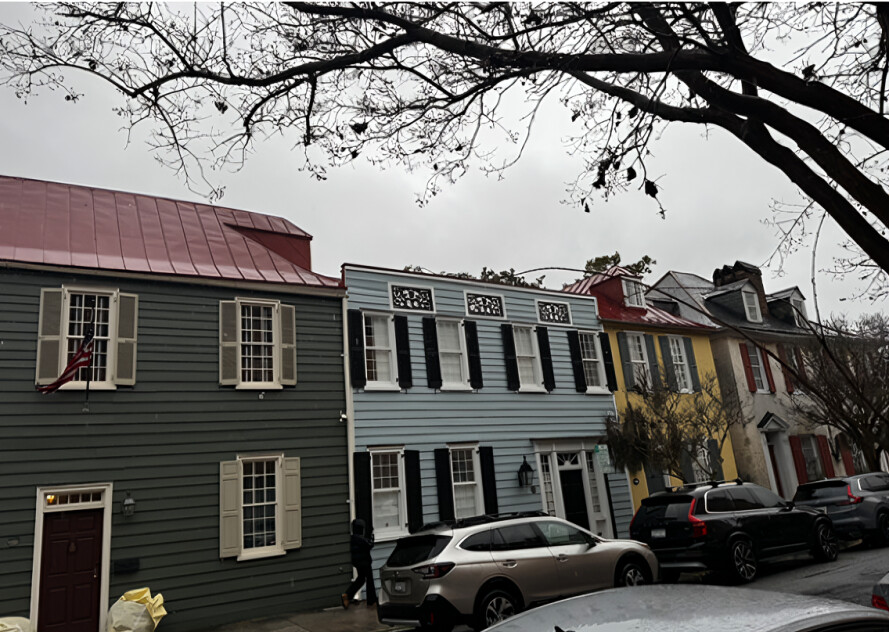
Charleston, founded in 1670 as Charles Town, stands as one of America’s best-preserved cities and holds the distinction of establishing the nation’s first historic preservation ordinance in 1931. The city’s architectural story spans more than 350 years, creating a living museum of American building traditions that draws visitors from around the world.
The earliest colonial structures, dating from the late 1600s and early 1700s, were characterized by simple, practical designs. English colonists built what they knew using available materials, constructing low-to-the-ground homes with minimal decoration, few windows, and end-placed chimneys to facilitate cross-breezes in the subtropical climate. Some buildings, like the iconic Pink House on Chalmers Street built between 1694 and 1712, were constructed from limestone shipped from Bermuda. These Colonial-era structures laid the foundation for Charleston’s distinctive architectural character.
As Charleston grew into a prosperous trading hub, its architecture evolved dramatically. Georgian style, prominent from the 1700s through the Revolutionary period, introduced symmetrical facades, brick construction with classical details, and formal entryways with decorative pediments. The Federal period that followed brought more refined ornamentation, including elaborate doorways and fanlights. The antebellum era saw the introduction of Greek Revival and Italianate styles, as wealthy Charlestonians displayed their prosperity through grand columns, rounded windows, and ornate cupolas.
Perhaps most distinctive to Charleston is the “single house” consisting of a long rectangular structure positioned with its narrow end facing the street designed to maximize lot usage while capturing prevailing breezes through side-facing piazzas. These iconic homes, along with the city’s wrought iron fences, secret gardens, and steepled skyline, create the romantic streetscape that has earned Charleston the nickname “The Holy City.”
A City Shaped by Climate Emergencies
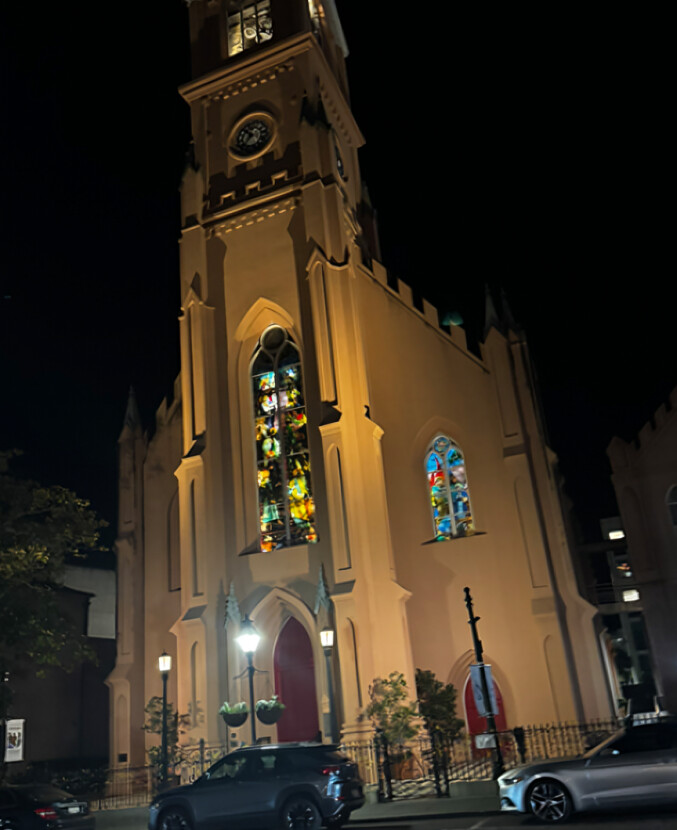
Charleston’s architectural resilience has been forged through centuries of natural disasters. The city has survived smallpox epidemics, pirate raids, the Great Fire of 1861, and numerous devastating hurricanes. However, two climate-related challenges have most profoundly shaped its built environment: the catastrophic earthquake of 1886 and the persistent threat of flooding that continues to this day.
The Great Charleston Earthquake: On the evening of August 31, 1886, at approximately 9:50 p.m., one of the most powerful earthquakes ever recorded on the Eastern seaboard struck Charleston with an estimated magnitude of 6.9 to 7.3. The initial shock lasted approximately 45 seconds, but its impact would reshape the city for generations. The quake caused approximately 60 deaths, damaged nearly all 8,000 structures in the city, and resulted in $5 to $6 million in damage, which is equivalent to roughly $192 million today. The shaking was felt as far away as Boston, Chicago, and Cuba.
Brick and masonry buildings suffered the most severe damage due to their weight and unreinforced construction. Many historic structures crumbled, while others were left dangerously unstable. In response, Charleston’s builders developed an innovative solution: earthquake bolts. These iron reinforcing rods, which had been used in limited applications before the earthquake, became ubiquitous throughout the city during reconstruction. The rods pass through the entire structure, connecting walls on opposite sides, with decorative gib plates visible on building exteriors. These plates, fashioned as stars, crosses, circles, or even lion heads, have become iconic symbols of Charleston’s resilience and are now celebrated as distinctive architectural elements.
Chronic Flooding: Charleston’s peninsula location, surrounded by water on three sides, has always made it vulnerable to flooding. However, this challenge has intensified dramatically in recent decades. Sea levels in the Charleston area have risen approximately 10 inches since 1950, with an acceleration to one inch every two years since 2010. In the 1950s, the city experienced tidal flooding roughly two days per year; by 2019, that number had increased to 89 flood events annually. Projections suggest that by mid-century, Charleston could experience tidal flooding every four to five days, with some estimates indicating up to 180 flood days per year by 2045.
Much of the development in Charleston has occurred on land that was historically marshland or tidal creek, filled in over centuries through land reclamation. This artificial ground is particularly vulnerable to flooding and liquefaction during seismic events. The city’s 19th-century gravity-based drainage system, while ingenious for its time, becomes less effective as sea levels approach the level of the streets. Charleston is currently weighing a $1.3 billion sea wall project and comprehensive water management initiatives to address these mounting challenges.
The Barrier Islands: Kiawah, Isle of Palms, and Sullivan's Island
Additional recent residential deconstruction appraisals have focused on properties across Charleston’s barrier islands, considered exclusive coastal communities where historic character meets contemporary vulnerability to climate challenges. These islands face the dual pressures of sea level rise and increasingly intense hurricanes, making thoughtful renovation and reconstruction essential.
We have produced appraisals for around 20+ homes from this area in the past year.
Kiawah Island, renowned for its environmental stewardship and architectural guidelines, features homes built with premium materials designed to withstand coastal conditions. Isle of Palms and Sullivan’s Island, with longer settlement histories, contain a mix of historic beach cottages and modern construction. All three communities share a commitment to quality construction and, increasingly, to sustainable practices that preserve valuable materials when homes are renovated or rebuilt.
Historic Downtown Charleston: Interior Gut Renovation
Our work in downtown Charleston involved the careful interior deconstruction of a historic home undergoing renovation. Such projects require particular sensitivity to the irreplaceable nature of original materials. Historic Charleston homes often contain elements that cannot be replicated with modern manufacturing: hand-made antique brick with distinctive coloring and texture, original clapboard siding with old-growth wood grain patterns, wide-plank heart pine flooring, and custom millwork crafted by 18th and 19th-century artisans.
The visible earthquake bolts on many downtown structures serve as constant reminders of the materials’ historic significance and the engineering ingenuity of previous generations. When these elements are removed during renovation, deconstruction ensures they find new life in restoration projects throughout the region rather than ending up in landfills.
The Value of Charleston's Deconstructed Materials
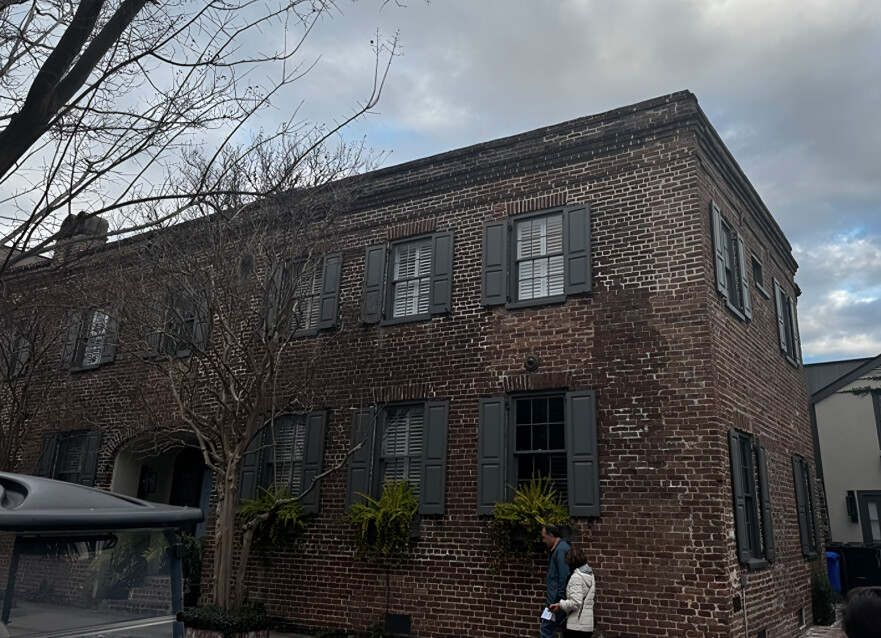
Deconstruction removes valuable building elements and makes them available for reuse on the secondary market, preserving both material resources and architectural heritage. The materials recovered from Charleston-area properties include:
Historic Brick: Charleston’s antique brick, including distinctive “Charleston grey” varieties, commands premium prices for restoration projects. Each brick carries the patina of centuries, with color variations and hand-formed textures impossible to replicate.
Clapboard Siding: Original wood siding, often cut from old-growth timber, features tight grain patterns and natural durability that modern lumber cannot match.
Hardwood Flooring: Wide-plank heart pine and other hardwood flooring from historic homes represents centuries-old timber with dimensional stability and beauty unattainable in contemporary products.
Cabinetry and Millwork: Custom cabinetry and architectural millwork, whether original to historic homes or high-quality contemporary installations, retains significant value for reuse.
Like-New Appliances: Modern renovations often involve removing perfectly functional, high-end appliances that find ready markets for reuse.
Cedar Decking: Premium decking materials, particularly prized in the coastal environment for their natural resistance to moisture and insects, maintain substantial value when properly deconstructed.
Honoring the Past, Building the Future
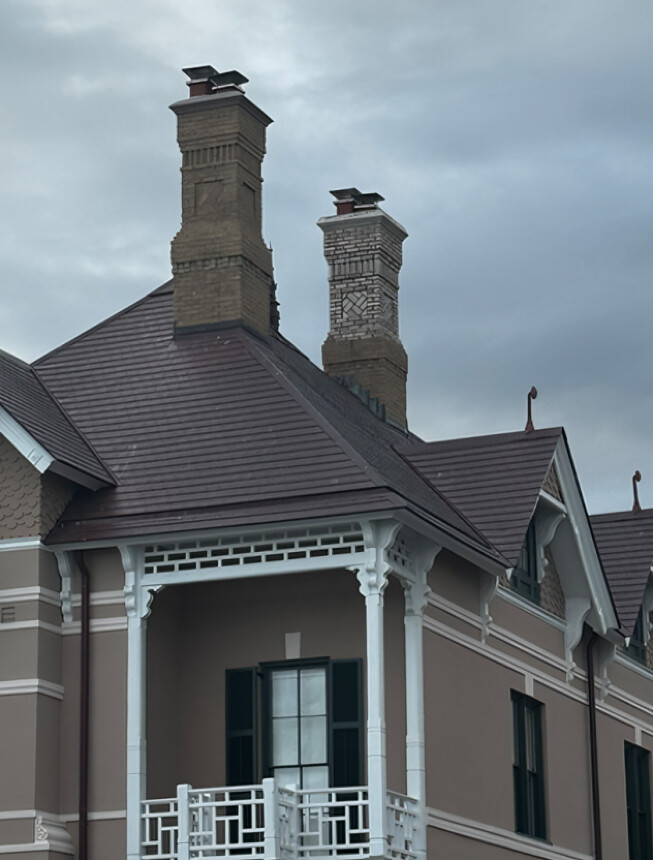
Charleston’s architectural heritage represents more than aesthetic charm—it embodies the ingenuity and resilience of generations who built and rebuilt in the face of earthquakes, hurricanes, fires, and floods. The earthquake bolts that dot building facades throughout the historic district stand as tangible reminders that preservation and adaptation have always been part of Charleston’s character.
Through IRS-qualified deconstruction appraisals, The Green Mission Inc. and GM-ESG help property owners participate in this tradition of thoughtful stewardship. By carefully documenting and valuing materials that can be salvaged and reused, we enable meaningful charitable deductions while ensuring that irreplaceable building elements continue to serve future generations.
As Charleston continues to confront rising seas and evolving climate challenges, the principles of material conservation and adaptive reuse become ever more relevant. Each deconstruction project we appraise contributes to a circular economy that honors the craftsmanship of the past while building resilience for the future.
Historic Preservation
Our ongoing deconstruction and appraisal work continues to align with the work I have been honored to do serving as a member of the Rethos Board of Directors. Rethos is a Minnesota-based 501(c)(3) nonprofit focused on historic preservation, community revitalization, and the sustainable reuse of buildings and building materials. The organization’s mission centers on inspiring people to connect with the places that shape communities, to preserve cultural heritage, and to help ensure that historic structures remain active contributors to local life and economy. I am excited to begin my second term as Treasurer and continue assisting with the historic preservation mission. Rethos More information on Historic Tax Credits here: Historic Tax Credits and Deconstruction Tax Deductions
Deconstruction in the Southeast
Here is some information for some great groups based in the Southeast that can assist with deconstruction and donation of building materials and other property:
Sustainable Warehouse (Charleston, SC)
Sustainable Warehouse is a nonprofit building materials reuse organization serving the greater Charleston area. The organization accepts salvaged architectural components, fixtures, appliances, cabinetry, flooring, and dimensional lumber from residential and commercial deconstruction projects. Sustainable Warehouse provides a critical local outlet for donated materials, supporting both reuse and charitable contribution strategies while helping to reduce construction and demolition waste. Its proximity to Charleston makes it a key partner for projects seeking local diversion pathways.
Re:Purpose Savannah (Savannah, GA)
Re:Purpose Savannah serves as a major regional reuse hub for coastal Georgia and neighboring South Carolina markets. The organization specializes in accepting salvaged building materials, architectural elements, and interior finishes from deconstruction projects. Due to limited reuse infrastructure directly within some South Carolina coastal communities, Re:Purpose Savannah frequently functions as an extended-market outlet for Charleston-area projects, particularly for higher-quality or historically significant materials.
Conway Salvage (Conway, SC)
Conway Salvage operates as an architectural salvage and resale outlet serving northeastern South Carolina. The organization focuses on reclaimed doors, windows, flooring, millwork, and select fixtures. For projects located north of Charleston or along the Grand Strand corridor, Conway Salvage provides an important secondary-market destination for recovered materials, particularly those suited for resale rather than nonprofit donation.
Habitat for Humanity ReStore (Multiple Locations)
Habitat for Humanity ReStores operate throughout South Carolina and the broader Southeast, including locations accessible from Charleston. ReStores accept a wide range of salvaged building materials, appliances, cabinetry, and fixtures from deconstruction projects. These outlets provide consistent reuse pathways and support charitable missions, though acceptance criteria and volume capacity vary by location. ReStores often serve as reliable partners for standard residential materials recovered during partial or full deconstruction.
For more information about IRS-qualified deconstruction appraisals,
contact The Green Mission Inc. or GM-ESG.
www.GM-ESG.com