The process of deconstruction is to carefully dismantle existing structures with the intent of salvaging and reusing materials and fixtures with remaining useful life. These services are an environmentally friendly alternative to demolishing and throwing the contents into the dumpster, and eventually, the landfill.
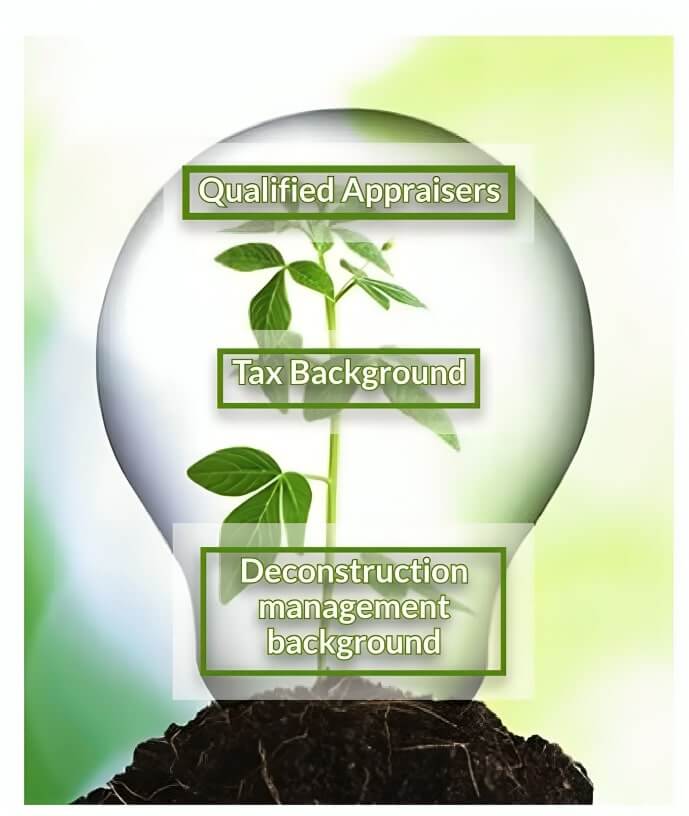
Appraisal Principles and Procedures, Henry A. Babcock, FASA is the core course publication used by the American Society of Appraisers (ASA) as a textbook for becoming a credentialed member of their organization. Information and procedures outlined within the text can be applied to what we call “deconstruction appraisals.” Some suggest alternate titles such as “Architectural Salvage Appraiser,” or, “Reuse Appraiser,” The title does not matter; the valuation methodology does. There is no defined category for appraisals of these type within ASA at this time, however we expect the demand for these appraisals to continue to increase as deconstruction ordinances are passed and circular economy goals become more widely embraced. Individuals and businesses will discover tax deductions for the value of these materials as an attractive tax savings. Throughout this textbook, Babcock provides critical analysis that must be considered when valuing materials and property for income tax deduction purposes, and by extension, by deconstruction, architectural salvage or reuse appraisers. We will stick to “deconstruction appraiser” for the remainder of this writing for simplicity.

The practice of architectural preservation and green design is not a new concept to those in the business of practicing sustainable architecture methods. Both practices seek to minimize negative environmental impacts by choosing to reduce, reuse, and recycle building materials. Architects employing greater sustainability practices can often benefit considerably when they take into account the opportunities that lay in the construction and demolition (C & D) phase of the design process.
Are you a commercial property owner facing the daunting task of orchestrating a corporate clean-out or remodel? Are there perfectly reusable furnishings, appliances, desks, computers, cubicles, or cabinetry slated to be discarded now or in the future? Would you be open to learning the benefits of waste diversion and contributing to make this world a safer, greener place for generations to come? Would you also potentially like to save money in the process and feel good about your business choices?
Deconstruction is the purposeful and careful disassembly of a building so as to salvage construction materials and property suitable for reuse. The mandatory deconstruction of buildings has been implemented in cities like Portland, Oregon mandating full deconstruction for houses built in 1916 or earlier or are designated historic. The drafted resolution outlines reasons for implementation including:
The Environmental Protection Agency created a valuable publication entitled “Design for Deconstruction.” The aim of this article is to add our observations of industry practice using the ample research produced and presented in their publication and others, especially with respect to the use of concrete in buildings. The publication presents startling statistics including: