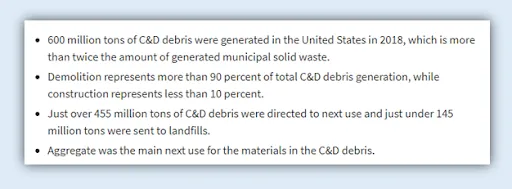
Tax policy aligning with environmental initiatives is a wonderful and rare occurrence within the Internal Revenue Code. An individual may choose to deconstruct, or “un-build” a structure and donate the materials to charity, rather than demolishing the structure and sending materials to the landfill. When donated to a 501(c)3 charity or governmental entity, a tax deduction can be taken for the IRS defined Fair Market Value of the materials, fixtures, furnishings, appliances and other property incident to the deconstruction. These materials and property have solid value on the secondary retail “resale” market.

In the recent Mann v. United States case, the federal court of appeals set important precedent in determining how deconstructed and donated building materials, furnishings, and fixtures should be valued in line with IRS defined Fair Market Value. Along with proper and accurate valuation comes two equally important issues: what does and does not constitute an IRS defined Qualified Appraisal and Qualified Appraiser? We first provide an overview of deconstruction and its tax implications, and then address the impact of the Mann case.

The Green Mission Inc. works closely with clients who choose to donate personal property from their estate to charities. Not only does this give the property a second life, it directly impacts the lives of those for whom charities offer aid and support. Charitable purposes and missions range from providing furnishings for those moving into stable housing, support for those in drug treatment programs, to providing furnishings, fixtures, and appliances to underserved populations for free or reduced prices, and myriad missions that help those across the country—from inner cities to rural communities.

The past two years have been a whirlwind of professional excitement since entering the deconstruction and appraisal space. I ran and concurrently run a small tax consultation practice of 19 years. It was fascinating to delve into the appraiser practitioner side of tax form 8283 and research the interrelated fields of tax policy for non-monetary charitable contributions along with personal property appraisal methodology and theory.