

From the colonial streets of Quito to the sprawling Andean mountains, Ecuador is full of communities that deeply understand their relationship with nature and the beauty within it that is worth preserving. As one of the most biodiverse countries in the world, Ecuador is home to many ecosystems and regions to explore and protect. In the Andean region, where I stayed, I could see the tip of Mount Cotopaxi, one of the world’s highest active volcanoes (“Top Natural Attractions & Marvels Of Ecuador”, Aurora Expeditions). Heading east, you enter Ecuador’s unique cloud forests, high-altitude forests that get their moisture from clouds, creating a constant canopy of fog and humid, wet environment – markedly different from the dry, volcanic Andes. Continue east, and you reach the edge of the Amazon rainforest. Ecuador is home to seven UNESCO biosphere reserves, including one in the Ecuadorian Amazon. The Yasuní Biosphere Reserve is one of the most biodiverse areas on the planet and is home to unique species, vegetation, and Indigenous communities (“Seven Biosphere Reserves in Ecuador”, UNESCO).
For three weeks in July, I studied abroad in Ecuador’s La Sierra region alongside seven other William & Mary students and two incredibly inspiring professors from the Hispanics department (who just happen to be married!). During those three weeks, I had the opportunity to live at Finca Palugo, an organic farm and community that has spent over 20 years dedicated to sustainability and education. Life at the farm was a welcome, if unfamiliar, escape from the conventional comforts of air conditioning, gas stoves, and constant hot water that I so often take for granted in the United States. Most significantly though, I had never felt so connected to the earth and to a close-knit community. With every meal, I knew that at least 80% of the ingredients had been grown and freshly picked just a few yards away. The yogurt and milk I ate came from the same cows I got up at 5:30 in the morning to feed. At Palugo, everything works as part of a small ecosystem. Every element and function within that ecosystem is recognized as essential to maintaining harmony with nature.
After working with The Green Mission before my trip and researching used building materials, I arrived already aware of how many materials can be reused and salvaged rather than swiftly discarded. At Palugo, nothing is treated as waste. Everything plays an essential role in the ecosystem, which means treating even what we might consider trash with care and attention.
For example, Palugo cherishes their composting systems. They play a major role in nourishing the soil and maintaining healthy crops year-round. After meals, food scraps, such as fruit peels and leftovers, aren’t simply thrown in the trash. Instead, they go into a composting system that helps feed the pigs, which, in turn, contribute to the farm’s ecosystem. Equally remarkable are the farm’s composting toilets. At Palugo, as in some other communities in Ecuador, composting systems offer an alternative to conventional flush toilets, using materials such as sawdust. I was initially cautious about this arrangement, but I adjusted surprisingly quickly and came to understand its benefits for the farm and the environment. When a single toilet can use up to two gallons of water per flush, it’s easy to see how much water goes into maintaining our everyday comforts (“US Indoor Water Use”, EPA).
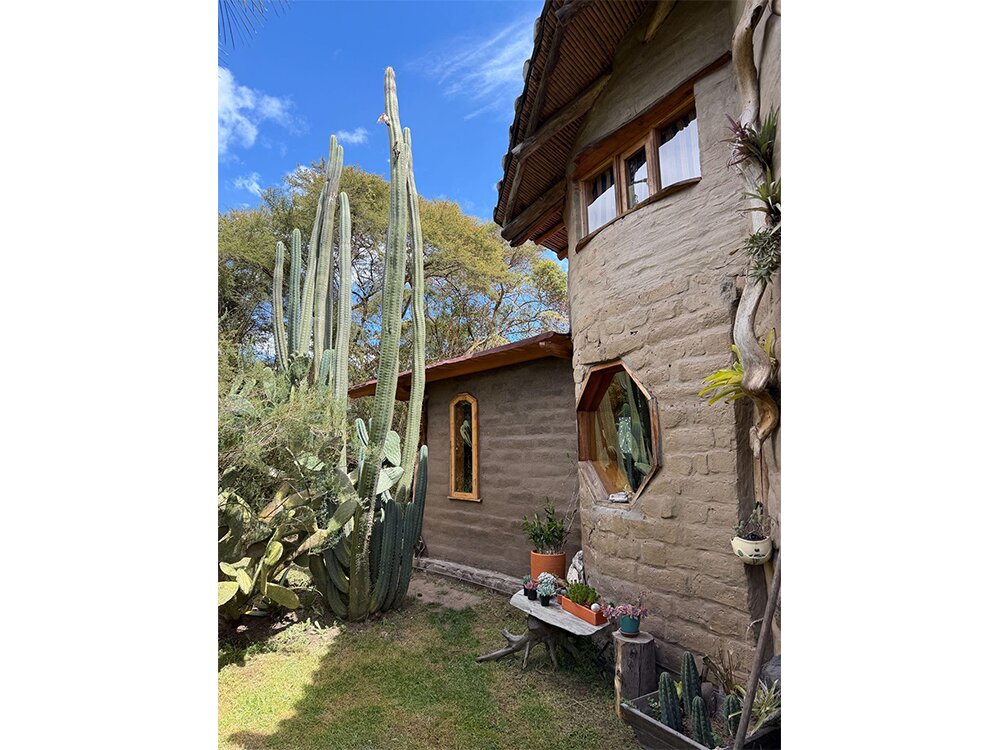
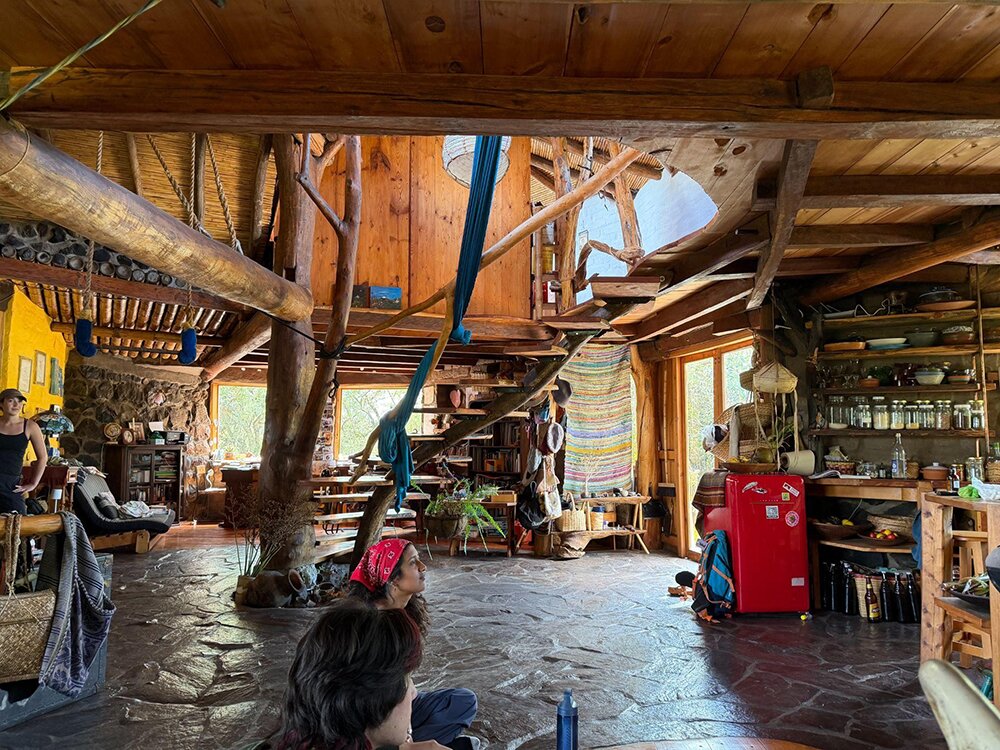
Beyond its composting system, what truly amazed me was the resourcefulness behind the hand-built houses and other structures on the farm. One of the owners shared the story of how he and his wife designed and built their own home, crafting every corner with intention and respect for the space and materials. The house looks as though it was built around a tree, with its sturdy structure incorporating the tree into the home’s design (as shown in the accompanying pictures). Rather than removing a natural feature to make way for a building, the owners worked with the landscape to create something beautiful and new. Much of the wood and other materials came from the farm itself, and the owners built the house with help from members of the community. This is not just another cookie-cutter house, but a home deeply connected to the materials around it and to the Palugo community’s care for the earth.
I thought of The Green Mission while touring the house. Here was a clear example of a sustainable project that used and transformed available resources to create a beautiful home. This hand-crafted house made me think about the homes I see in the suburbs of Northern Virginia, with their cookie-cutter frames and shiny new rectangles lining the highways. Where do their materials come from? Could some of those materials be sourced from the second-hand market instead? These questions may be easy to ask, but in practice, new developments do not always prioritize sustainable choices when built around efficiency and profit. The context of construction at Palugo differs greatly from that of most American communities, but its commitment to working with the environment rather than exploiting it offers valuable lessons for the construction industry.
One lesson I brought home from my study abroad experience is the importance of acting with intention. That may sound like a general statement, but it has taken on new meaning after seeing how intentionally the people at Palugo approach their lives. At the farm, decisions are guided by the principles of permaculture: care for the earth, care for people, and fair sharing of resources. These principles encourage practices such as finding small, gradual solutions, producing no waste, carefully observing and interacting with the environment, and creating manageable, resilient systems that work together. Farms and communities like Palugo organize their work, harvests, and communication around these values, which requires intention and dedication. Using local resources or carefully considering the environmental and social effects of an action may not always be the easiest or most efficient option. But if caring for the earth and its resources matters to you, you have to be intentional about whether your actions align with those values.
On a more concrete level, making intentional decisions based on your values can look like taking that extra step to carpool with a friend rather than driving separately, or thrifting for clothes rather than buying something new. In the case of construction, it can mean a developer opting to use previously-owned building materials in a build rather than purchasing every piece brand new.
Whatever the case may be, seeing this example of an intentional environment – where sustainability isn’t just a brand slogan but a core, integrated value of the community – was incredibly inspiring, proving that you can still be successful while preserving the resources and land around you. Although it is easy to feel inspired by this way of life, making similar changes in our own communities can be difficult. A good place to start is with the simple daily habits that often make up our lives without much thought. Over time, these small changes can transform our own little ecosystems and strengthen our communities. Take, for example, shopping at a local farmers market each Saturday instead of a large grocery store; not only are you supporting your local farmers, but now you have the opportunity to see the same vendors every week and build connections within your community.
Whether on a farm in Ecuador or in the suburbs of Washington D.C., there is always room to act with greater intention and live out the values that matter most to us. Small steps taken each day can lead to greater care for our environment and our communities. For me, that also means rethinking what we consider waste and recognizing the value in materials we might otherwise discard. The more intentionally we use the resources already around us, the more opportunities we create to build a sustainable future.
Pictures of the hand-built house on the farm: